


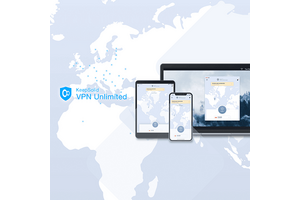
KeepSolid at a glance
KeepSolid positions itself as a practical VPN service rather than a niche power-user tool. The service is built around accessible apps, straightforward configuration, and support for common VPN tasks such as encrypted browsing on public Wi-Fi, changing virtual locations for streaming, and protecting traffic on mobile devices and laptops.
What sets it apart is not a single headline feature, but the way it tries to bundle multiple VPN functions into a tidy product. That can be useful for someone who wants a service that works across Windows, macOS, iOS, Android, and other common platforms without much setup friction. It is less compelling for buyers who rank open technical transparency, third-party validation, and long-term privacy reputation above convenience.
Who KeepSolid fits best
KeepSolid makes the most sense for people who want a VPN that is simple to install, easy to use daily, and capable of handling standard privacy and streaming tasks without a steep learning curve. It is also a reasonable option for travel use, especially on airport Wi-Fi, hotel networks, and other untrusted connections where a stable encrypted tunnel matters more than advanced configuration.
It is a less obvious fit for users who want the strongest possible anonymity posture, highly detailed public documentation, or a service with a long track record of independent security scrutiny. Those factors matter more when the VPN is being used as part of a broader privacy strategy that also includes browser privacy settings, protection against WebRTC leaks, DNS privacy, and limiting a digital footprint.
Apps and everyday usability
One of KeepSolid’s clearer strengths is usability. The apps are generally designed to be approachable, with controls that are easy to find and settings that do not overwhelm casual users. That matters because a VPN only protects traffic properly when it is actually enabled and configured correctly. A clean interface reduces the chances of weak defaults or accidental misconfiguration.
The service also includes the kinds of controls many people now expect from a mature VPN: a kill switch to help stop traffic if the tunnel drops, split tunneling for separating VPN and non-VPN traffic, and the usual server selection workflow for switching locations. Those features are not rare in the VPN market, but they are important because they directly affect reliability in real use. Readers who want to understand how these tools work in practice can compare them with VPN kill switches and split tunneling.
KeepSolid’s main advantage here is consistency. It aims to be usable on the first day without requiring users to study advanced networking details. The limitation is that simplicity sometimes comes at the cost of deeper customization, and power users may find the feature set adequate rather than exceptional.
Privacy and trust: the most important trade-off
For a VPN, app design matters, but privacy posture matters more. This is where KeepSolid becomes a more mixed proposition. A trustworthy VPN should make it easy to understand what data it collects, how it handles identifiers, whether it keeps logs, and whether any independent audit or verification backs those claims. That level of clarity is especially important for anyone using a VPN to reduce exposure from online tracking, public Wi-Fi interception, or ISP-level visibility.
KeepSolid is not the most prominent name in the privacy-first segment, and that affects how it stacks up against the leading options in this market. If a service does not clearly match the top performers on audit depth, ownership transparency, and long-term public scrutiny, buyers need to weigh convenience against confidence. That does not mean the service is unsafe by default. It does mean the burden shifts more heavily onto the customer to evaluate the policy details.
Anyone comparing VPNs seriously should also think beyond the app itself. Browser fingerprinting, cookies, data brokers, and other tracking layers still matter even when a VPN is active. A VPN can hide the IP address and encrypt traffic, but it does not erase all identifiers. For that reason, KeepSolid should be viewed as one part of a broader privacy stack, not a complete anonymity solution. Relevant background reading includes browser fingerprinting, data brokers, and digital footprint.
Speed and server experience
In general VPN performance depends on server quality, distance to the server, local network conditions, protocol choice, and congestion. KeepSolid is positioned to serve everyday use cases rather than ultra-specialized low-latency scenarios. That means it should be evaluated on real-world consistency more than on marketing claims about maximum speed.
For browsing, messaging, calls, and routine streaming, a solid VPN can be perfectly adequate if the server network is stable and the app switches cleanly between locations. For demanding tasks like gaming, high-bitrate 4K streaming, or frequent region switching, the quality of the underlying network matters much more. A VPN can sometimes reduce ping or route you through a different peering path, but it can also increase latency. Readers interested in the technical side can compare this with VPN servers and reduce ping.
KeepSolid does not stand out as a performance specialist in the way some of the fastest premium VPNs do. That is not a fatal weakness, but it does mean buyers prioritizing raw speed, very low jitter, or highly optimized routing should look closely at independent speed testing and nearby server quality before committing.
Streaming and location switching
KeepSolid can be considered for streaming because VPN location switching is one of its standard use cases. In practice, a VPN’s usefulness for streaming depends on whether it can reliably access geo-restricted services, avoid detection, and maintain stable throughput during playback. Not every server works equally well, and streaming platforms frequently change their blocking methods.
That makes streaming support a moving target rather than a permanent promise. If the main goal is watching region-locked catalogs while traveling, KeepSolid may be sufficient as long as it provides enough location options and dependable connections. If the priority is consistently unlocking multiple platforms on a daily basis, services with larger anti-blocking infrastructure often have the edge.
Travelers should also consider device support. A VPN that works well on a phone but struggles on smart TVs, streaming sticks, or router setups can create friction. For related context, see geo-restricted streaming, streaming abroad, and router VPN setup.
Security features that matter in day-to-day use
On the security side, the most important question is whether the VPN provides dependable baseline protections. A strong VPN should encrypt traffic, offer leak protection, and include controls that reduce the risk of accidental exposure. KeepSolid appears to address the standard essentials, which is the minimum bar for a credible modern VPN.
Still, buyers should not confuse a VPN with total security. DNS leaks, IP leaks, insecure browser settings, and app permissions can all undermine privacy if they are not handled properly. A VPN is strongest when paired with correct system and browser configuration. That is why practical security reviews should always consider DNS leak protection, IP leak protection, and secure browsing checklist.
KeepSolid’s value depends heavily on how well these protections are implemented and whether the service communicates its limitations honestly. If the documentation is clear and the defaults are safe, that improves confidence. If details are vague, the product becomes harder to recommend for more sensitive use cases.
Platform support and setup
Cross-platform support is one of KeepSolid’s practical strengths. A VPN becomes more useful when it follows the user across desktop, laptop, and mobile devices. A solid app on iPhone or Android matters as much as a polished Windows or macOS client, especially for people who move between home, work, and travel networks.
The setup experience should remain straightforward across these environments, and that generally appears to be part of KeepSolid’s appeal. It is the kind of service that can suit non-technical users who want to install an app and begin using it quickly. For device-specific guidance, related topics include iPhone VPN, Android VPN, Windows VPN setup, and macOS VPN setup.
Advanced users may still want more control than a standard app interface offers. Manual configuration, router installation, and troubleshooting support can become important if the VPN is being deployed across a household network or used with devices that do not support native apps. In that respect, it is worth comparing KeepSolid with providers that emphasize more technical flexibility.
Pricing and overall value
KeepSolid’s value proposition depends on the plan structure and the feature set included at each tier. In the VPN market, pricing is only meaningful relative to what the service actually delivers: server quality, platform support, trust signals, and reliability. A low advertised price is not automatically a bargain if the service underperforms in the areas that matter most.
KeepSolid can be attractive if the chosen plan aligns with the user’s needs and the app experience is smooth enough to justify the cost. It becomes less compelling if the service charges close to premium competitors without matching their transparency, network strength, or independent validation. That is a common fault line in VPN shopping: the cheapest option is not always the best value, and the most expensive option is not always the strongest.
For anyone comparing the market carefully, a fair assessment should include not just subscription cost but also renewal behavior, device limits, refund terms, and whether the service feels built for long-term trust. A VPN is an ongoing relationship, not a one-time purchase.
Strengths and limitations
- Strengths: easy-to-use apps, broad platform support, useful daily features, and a practical design that lowers the barrier to entry.
- Strengths: suitable for ordinary privacy protection on public Wi-Fi and general travel use.
- Strengths: includes core VPN controls such as kill switch and split tunneling.
- Limitations: not the most transparent choice in a market where audits and public trust matter heavily.
- Limitations: less compelling for users who want top-tier performance or highly advanced customization.
- Limitations: streaming reliability and advanced privacy confidence may vary more than with the strongest category leaders.
Bottom line
KeepSolid is a competent, user-friendly VPN that covers the essentials well and can work nicely for everyday browsing, travel, and casual privacy protection. Its best qualities are simplicity and practical functionality. Its biggest weakness is that it does not clearly dominate the trust and transparency standards set by the strongest VPN brands.
If the priority is a straightforward VPN experience with familiar controls and minimal setup hassle, KeepSolid is worth considering. If the priority is maximum privacy confidence, deeper public accountability, or best-in-class performance, it is wiser to compare it carefully with stronger alternatives before making a decision.